What They Never Said Out Loud: The Political Silences Your Parents Left You to Carry
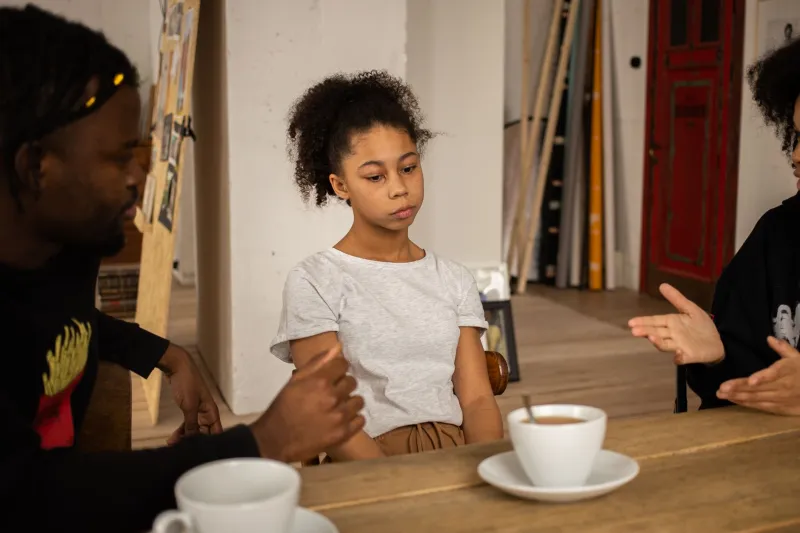
There is a particular kind of grief that arrives not at a graveside, but at a kitchen table — or sometimes in a shoebox of old letters, or in the offhand confession of an aging parent who has finally decided that the performance is too exhausting to maintain. It is the grief of realizing that the family you thought you knew was, in part, a carefully managed production. And somewhere in the program notes, the political beliefs your parents actually held were listed under a different name.
This is not a fringe experience. Across the United States, adult children are quietly confronting the discovery that their parents — the architects of their earliest understanding of the world — masked, softened, or outright concealed their political convictions. The reasons vary: fear of social ostracism in a tight-knit community, the desire to preserve family harmony across a divided extended family, or simply the exhausting pragmatism of people who learned early that certain truths carry a price. Whatever the cause, the effect on the children left to inherit those silences is profound and frequently unexamined.
The Inheritance Nobody Names
When we speak of inheritance, we tend to think in terms of property, temperament, or tradition. We speak less readily about the inheritance of unspoken things — the beliefs that shaped a household's emotional weather without ever being formally declared. Yet political silence is itself a kind of transmission. Children absorb not only what their parents say, but the contours of what they refuse to say, the flinch before a certain question, the subject that is always, somehow, changed.
Dr. Kenneth Hardy, a family therapist and scholar whose work addresses intergenerational trauma, has long argued that what families do not say can be as formative as what they do. In the political context, this dynamic plays out with particular intensity. A child raised in a household where one political identity was performed for the community while another was quietly practiced at home absorbs a foundational lesson: that authenticity is conditional, that the self presented in public and the self that exists in private are necessarily different creatures.
For some, that lesson becomes a survival skill. For others, it becomes a template for self-betrayal.
The Moment the Script Changes
The discovery rarely arrives as a single, clean confrontation. More often it accumulates — a voting record glimpsed on a screen, a comment that doesn't quite fit the family mythology, a sibling who finally breaks the unspoken agreement at Thanksgiving. Sometimes it comes only after a parent has died, in the form of documents, diaries, or the candid memories of people who knew them outside the family frame.
Marissa, a 38-year-old teacher from suburban Ohio, describes learning in her late twenties that her mother — who had raised her with a firm narrative of moderate, churchgoing Republicanism — had been quietly donating to progressive causes for years. "She never said a word about it," Marissa recalls. "Not once. And when I asked her about it, she just said she didn't want to start arguments. But the thing is, I had spent years arguing with her about politics, thinking I knew exactly where she stood. I had built my own identity partly in reaction to hers. And none of it was real."
The disorientation Marissa describes is not simply intellectual. It is relational. When a parent's political identity turns out to have been a performance, it raises uncomfortable questions about what else in the family story was staged — and about whether the child's own identity, constructed in deliberate contrast or careful alignment, was built on a foundation that was never quite solid.
Loyalty, Truth, and the Space Between
For adult children navigating this terrain, the tension between family loyalty and personal truth-telling is rarely resolved cleanly. To publicly name what was concealed can feel like a betrayal of the parent — an exposure of their private calculations and fears. To remain silent, however, is to perpetuate the very pattern that caused harm in the first place.
This is the inheritance in its most concrete form: not a belief system, but a dilemma. The child who grew up in a masked household must decide, often without any model for how to do it, whether to remove the mask or to pass it on.
Therapists who work with adult children of politically secretive families note that the work of processing this inheritance often requires separating two distinct questions. The first is historical: what did my parents actually believe, and why did they hide it? The second is personal: how has living inside that concealment shaped the way I present myself, form relationships, and navigate my own political identity?
The second question, many find, is the harder one.
When the Mask Becomes the Mirror
One of the more insidious effects of growing up with a parent's political mask is the way it can quietly normalize the practice of self-concealment. Children learn from what they witness, and what many witnessed was the daily management of a gap between inner conviction and outward presentation. The lesson absorbed, however unconsciously, was that this gap is simply how things work — that to be a functioning member of a family, a community, a country, is to accept that what you believe and what you say need not be the same.
For people who go on to inhabit politically complex environments — the progressive in a conservative small town, the Republican in a deeply blue urban workplace — that early training in strategic concealment can feel, at first, like a useful inheritance. The problem is that tools learned in childhood for the purpose of survival have a way of outlasting their original context. What was adaptive becomes automatic. The mask, worn long enough, begins to feel like a face.
Toward a Different Kind of Legacy
The families who manage to break this cycle tend to share a common willingness to tolerate discomfort — to sit with the awkwardness of political difference rather than smooth it over with silence or performance. That willingness is not easily cultivated in a culture that has, in recent years, made political disagreement feel increasingly like a threat to the relationship itself. When the stakes of disclosure feel existential, silence becomes rational.
But the cost of that rationality is borne by the next generation. Children who grow up without honest models of political selfhood — who see only the managed version, the performed consensus, the belief system adjusted for the audience — are left to construct their own identities without the benefit of truth as a reference point.
The work of reclaiming that reference point, for those who find themselves carrying a parent's political silence as an adult, begins with naming the inheritance for what it is. Not a protection. Not a kindness. A mask, handed down — and, like any mask, something that can be chosen or set aside.
The choosing, though, belongs entirely to you.