Fractured in the Feed: When the Person You Post Becomes the Person You Pretend to Be
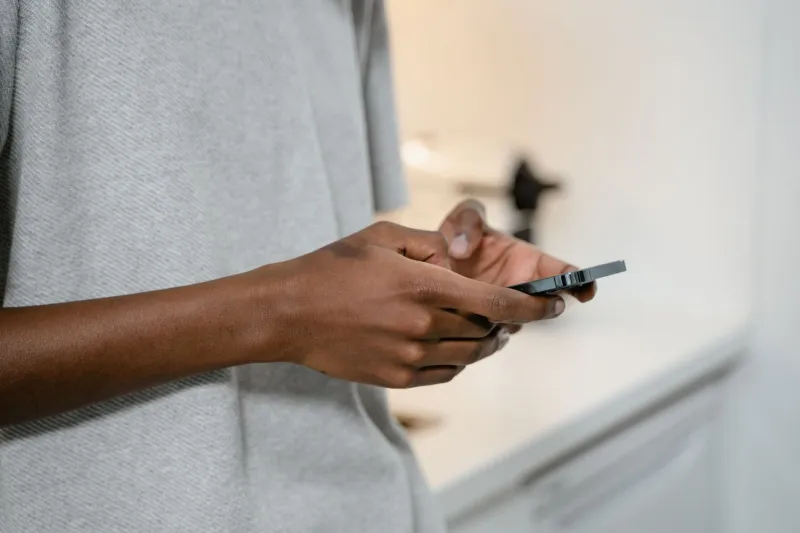
There is a particular kind of exhaustion that sets in when you realize you have been managing your own image for so long that you can no longer locate the original. It is not dramatic. It does not arrive all at once. It accumulates quietly, the way debt does — one small compromise at a time, one carefully selected photograph, one opinion softened just enough to avoid the comments section.
Most Americans who use social media regularly maintain, whether consciously or not, several distinct versions of themselves across platforms. The LinkedIn iteration is industrious and aspirational, fluent in the language of professional growth. The Instagram version is luminous and well-traveled, or at least well-filtered. The X — formerly Twitter — persona is sharper, more politically engaged, perhaps braver in the anonymity of the feed. And somewhere beneath all of them, there is the actual person: conflicted, uncertain, holding views that do not photograph well and feelings that resist the character limit.
We have come to treat this fragmentation as normal. More than normal — we have come to treat it as necessary.
The Architecture of Acceptable Selves
Social media platforms were not designed with authenticity as a priority. They were designed for engagement, which is a different thing entirely. Engagement rewards the legible, the shareable, the emotionally efficient. A nuanced position on immigration policy does not perform as well as a slogan. A photograph of your actual Tuesday — the unwashed dishes, the unpaid bill on the counter, the quiet anxiety about a conversation you have been avoiding — will not generate the same response as a curated moment of apparent joy.
The result is an architecture that systematically incentivizes self-editing. Every platform offers its own grammar of acceptability, its own unspoken rules about what kind of person thrives here and what kind of person gets ratio'd into silence. We learn these rules quickly, because the feedback is immediate and social, and because human beings are, at their core, exquisitely sensitive to the judgment of others.
What is remarkable is not that we adapt to these environments. Adaptation is a deeply human impulse. What is remarkable is that we have begun to mistake the adaptation for the self.
When the Mask Becomes the Face
Psychologists have long understood that the roles we perform shape the people we become. Erving Goffman's foundational work on social performance — the idea that all of us are, in some sense, always performing for an audience — predates the internet by decades. But digital platforms have accelerated and amplified this dynamic in ways that Goffman could not have anticipated.
When your performance is recorded, archived, and searchable, the stakes of authenticity shift. You are no longer performing for the room; you are performing for the record. And when the record becomes sufficiently extensive, it starts to feel like biography. The posts accumulate into a narrative. The narrative starts to feel like identity. And the identity — curated, optimized, acceptable — begins to crowd out whatever was there before.
This is not a metaphor. Researchers studying social media use have documented genuine psychological phenomena in which individuals report feeling alienated from their offline selves, as though the person they are in physical spaces is somehow less legitimate than the person they have constructed online. The digital self, paradoxically, can begin to feel more real precisely because it is more deliberate.
The Political Dimension We Rarely Name
The implications of this extend well beyond personal psychology, and it is here that the conversation becomes genuinely political — and genuinely urgent.
When people learn to curate their beliefs for public consumption, they do not merely adjust their tone. They adjust their thinking. The practice of self-censorship, repeated often enough, does not stay on the surface. It migrates inward. People begin to preemptively filter their own convictions before they have fully formed them, asking not "what do I actually believe?" but "what is safe to believe? What can I defend? What will not cost me followers, opportunities, relationships?"
This is a profound civic problem. Democratic participation depends on the capacity of individuals to hold genuine convictions and to express them honestly in public discourse. A citizenry that has outsourced its self-presentation to algorithmic incentives is a citizenry that has, in a meaningful sense, outsourced a portion of its political agency. The feed becomes the editor. Engagement metrics become the arbiter of what is worth saying.
For progressive communities in particular, this dynamic carries a specific irony. Movements built on the premise of speaking truth to power — on naming injustice, on refusing comfortable silence — have found themselves operating on platforms that reward performance over substance, visibility over depth. The activist aesthetic can become as much a mask as any other, a way of signaling identity without necessarily inhabiting it.
The Cost of Coherence
There are people who have tried to resist this fragmentation, who have insisted on presenting a single, consistent self across every platform and every context. They tend to report that it is costly. Employers find them too political. Family members find them too intense. Potential friends find them too much.
This is telling. It suggests that the compartmentalization we have normalized online is not simply a digital phenomenon — it reflects and reinforces a broader social expectation that people will modulate themselves according to audience, that the presentation of a whole and unedited self is somehow impolite, even aggressive.
The mask, in other words, is not just something we wear online. It is something the culture has decided we owe each other.
What It Would Mean to Take It Off
None of this is to suggest that privacy is wrong, or that every thought deserves a public platform, or that the performance of self is inherently fraudulent. Human beings have always presented differently in different contexts. There is a legitimate distinction between performance and deception.
But there is a difference between choosing what to share and forgetting who you are. There is a difference between managing your public presence and losing your private one.
The question worth sitting with is this: if you stripped away every platform, every profile, every curated feed — if you removed the LinkedIn summary and the Instagram grid and the carefully worded bio — who would be left? And would you recognize that person? Would you be willing to?
Behind every mask is a face that has been waiting, sometimes for years, to be seen without apology. The work of reclaiming it is not simple, and it is not comfortable. But it is, in the most literal sense, the work of becoming real.
In a media landscape that profits from our performed selves, choosing authenticity is not merely a personal decision. It is a political one.