The Geography of Coming Out: When Your ZIP Code Determines Your Safety
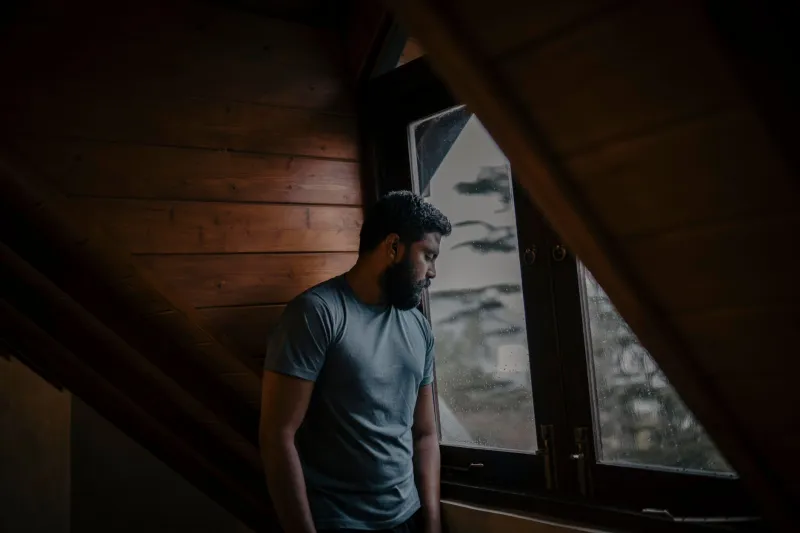
Marcus grew up in a small town in eastern Tennessee. He came out to himself at fifteen, to his best friend at nineteen, and to no one else for nearly a decade after that. He is thirty-one now, living in Nashville, and he still describes the years of silence not as repression but as arithmetic. "I did the math," he says. "I looked at what I had — my job at my uncle's shop, my family, my church, my whole life — and I looked at what coming out would cost me. The numbers didn't add up."
Marcus's calculation is not unusual. It is, in fact, one of the most common experiences among LGBTQ+ Americans who live outside major metropolitan areas — a quiet, ongoing risk assessment that transforms identity into strategy and self-expression into political exposure.
Visibility as a Calculated Risk
The national conversation about LGBTQ+ rights has, in recent years, centered heavily on legislative battlegrounds: bathroom bills, book bans, restrictions on gender-affirming care, and the erosion of workplace protections in states that have declined to extend federal guidance. But beneath those policy debates is a more intimate reality — one that does not make headlines but shapes millions of daily lives.
For LGBTQ+ people in states like Mississippi, Alabama, Idaho, and West Virginia, coming out is not a singular moment of liberation. It is an ongoing series of decisions about when, where, how much, and to whom to reveal oneself. It is a performance of strategic concealment, punctuated by rare and carefully chosen moments of disclosure.
According to data from the Williams Institute at UCLA School of Law, LGBTQ+ adults in the South report significantly lower rates of openness about their identity compared to those in the Northeast and West Coast. The disparity is not primarily about internalized shame — researchers are careful to make this distinction. It is about structural risk. It is about housing discrimination that remains legal in many states. It is about employment protections that exist in some jurisdictions and not others. It is about the documented reality that LGBTQ+ youth in unsupportive family environments are significantly more likely to experience homelessness, depression, and suicidal ideation.
The mask, in these communities, is not a choice made lightly. It is often the only available shelter.
The Weaponization of Visibility
In recent years, something has shifted in the cultural politics of LGBTQ+ identity — and not in a direction that makes coming out any safer in conservative communities. Visibility itself has become a political target.
The rhetoric of "grooming," applied broadly and falsely to LGBTQ+ people who are simply open about their identities, has created a climate in which existence is reframed as aggression. Teachers in Florida have removed family photographs from their desks out of fear of violating the state's so-called "Don't Say Gay" legislation. Librarians in Texas have faced organized campaigns to remove books featuring LGBTQ+ characters. Drag performers have received credible threats of violence at family-friendly events.
This is not incidental. It is strategic. When visibility is framed as predatory, the political incentive for LGBTQ+ people to remain invisible increases dramatically. The mask becomes not just a personal survival tool but a political demand — enforced through legislation, social pressure, and the ever-present threat of violence.
For those living in communities where this rhetoric dominates local politics and church culture, the message is consistent and clear: your authentic self is a problem we have decided to solve for you.
What Families Actually Look Like
Denise is a forty-four-year-old lesbian living in rural Louisiana. She has been with her partner for eleven years. They own a home together. They have a dog. Her partner coaches youth soccer. Denise teaches second grade.
Almost none of her students' parents know she is gay.
"I'm not ashamed of who I am," she says, with a precision that suggests she has made this clarification many times before. "I'm protecting my job. I'm protecting the kids I teach, because if parents pulled them out of my class, those kids lose a teacher who loves them. I'm protecting my partner, who has built relationships in this community. I'm protecting all of it."
Denise's situation illustrates something important: the cost of coming out in a conservative community is rarely borne only by the individual. It radiates outward, affecting partners, chosen families, and the broader networks of care that LGBTQ+ people build in the absence of guaranteed institutional support.
The decision to remain masked is, in this sense, often an act of love — a sacrifice of personal visibility made on behalf of others.
Authentic Living Under Constraint
What does it mean to live authentically when authenticity carries genuine consequences? This is the question that sits at the heart of the LGBTQ+ experience in red-state America, and it does not have a clean answer.
Some advocates argue that visibility — even at personal cost — is a political necessity. The logic is historical: LGBTQ+ rights have advanced most significantly in periods of increased visibility, when communities could no longer be dismissed as invisible or marginal. Harvey Milk said it plainly: come out, come out, wherever you are. Visibility changes minds.
But this argument places the burden of political progress on the shoulders of the most vulnerable. It asks people with the least protection to absorb the most risk. It is, in its own way, a form of extraction — demanding that marginalized individuals sacrifice their safety for the advancement of a collective cause.
The more honest position acknowledges that authenticity is not a universal luxury. For some Americans, the freedom to live openly is structurally available. For others, it is structurally withheld. The difference is not courage. It is geography, economics, family circumstance, and the presence or absence of legal protection.
Removing the Mask on Our Own Terms
Marcus eventually did come out — to his family, his coworkers, his community — over the course of several years, in his own sequence, at his own pace. Some relationships survived. Some did not. He does not describe the process as triumphant. He describes it as ongoing.
"People want it to be a moment," he says. "Like you take the mask off and there's a crowd and everyone claps. But it's more like — you just slowly stop performing. And some people can handle who you actually are, and some people can't. And you figure out which is which."
At Behind the Mask, we believe that the right to remove the mask — on one's own terms, in one's own time, without fear of legal, professional, or physical consequence — is not a luxury. It is a civil right. And until every American can exercise it, regardless of their ZIP code, the work of this country's democracy remains unfinished.