Born Into the Script: When a Family's Legacy Demands You Disappear Into It
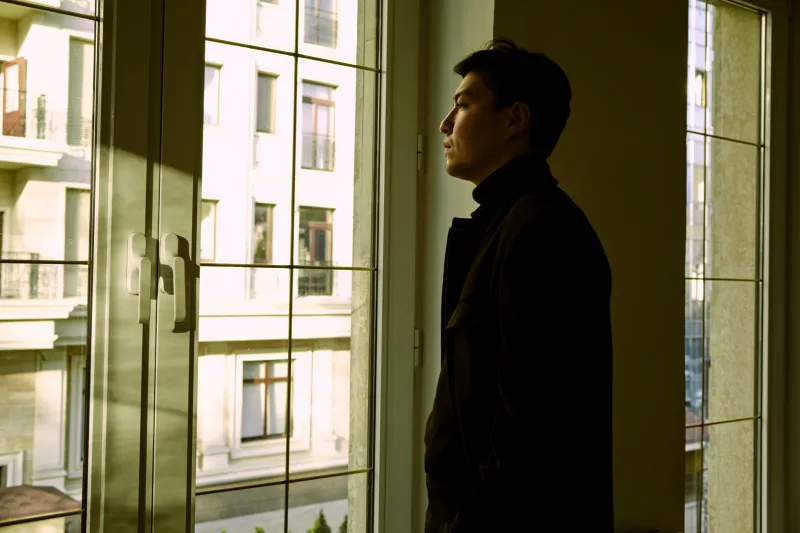
There is a particular kind of exhaustion that has no clean name. It is not the fatigue of overwork or the depletion that follows grief. It is the weariness that accumulates when you have spent years performing a version of yourself that was written before you were old enough to read it — a version authored by lineage, expectation, and the unspoken terror of what happens if you deviate from the text.
For individuals born into prominent families — political dynasties, old-money institutions, high-profile public households — identity is rarely experienced as something discovered. It is inherited. And inheritance, however gilded, carries its own form of captivity.
The Family as Brand, the Child as Asset
American political culture has long romanticized the dynasty. The Kennedys. The Bushes. The Clintons. The Romneys. We speak of these surnames as though they are institutions unto themselves, as though the individuals who carry them are simply custodians of a larger civic inheritance. And in many respects, that is precisely what they are expected to be.
But the dynastic logic does not confine itself to Washington. It operates in the boardrooms of multigenerational corporations, in the pews of influential megachurches, in the country clubs of mid-sized American cities where a family's standing is measured in decades rather than years. Wherever reputation functions as collective currency, the individual members of that family are expected to spend themselves carefully — or not at all.
Children raised in these environments absorb the lesson early: your private self is a liability. The opinions you hold that diverge from the family line, the relationships you form that complicate the family image, the doubts you carry about the values you were handed — these are not merely personal matters. They are reputational risks. And reputational risks, in households where status is existential, are treated accordingly.
Rehearsing for a Role You Never Auditioned For
What distinguishes this particular form of identity suppression from others is its totality. It does not ask you to mask one aspect of who you are in one context, as many Americans must do at work or in politically hostile communities. It asks you to perform comprehensively — at the dinner table, at the campaign rally, at the charity gala, in the family Christmas card photograph. The rehearsal never concludes because the performance never ends.
Psychologists who work with individuals from high-profile families frequently describe a phenomenon sometimes called identity foreclosure — a state in which a person adopts an identity handed to them by external forces without ever engaging in the exploratory process through which a genuine self is formed. The foreclosed individual does not rebel and then conform; they simply never receive the cultural permission to consider alternatives. The script was written. Their role was cast. The curtain rose before they understood what theater was.
The toll of this foreclosure is not always visible from the outside. These individuals are often described as poised, composed, and articulate. They have been trained to be. What they have not been trained to do is exist without an audience.
The Quiet Rebellion of the Private Self
And yet the private self persists. It always does. It surfaces in the books a person reads when no one is watching, in the friendships cultivated outside the approved social circle, in the political convictions quietly formed in opposition to the family orthodoxy. For many individuals in these situations, the private self becomes a kind of underground resistance movement — sustained in secret, nourished in stolen moments, and always at risk of exposure.
The fear of that exposure is not irrational. The consequences for stepping out of line in high-profile families can be swift and severe. Social ostracism. Financial disinheritance. Public humiliation. In political families specifically, a single act of authentic dissent can become a news cycle — a betrayal narrative that the family's communications apparatus moves quickly to neutralize. The wayward child is either brought back into the fold through pressure or recast as the cautionary tale.
What rarely gets told is the story of the person in the middle of that process — the one weighing the cost of honesty against the weight of belonging, trying to determine whether the self they have kept hidden is worth the rupture its revelation would cause.
The Progressive Stakes of This Conversation
This is not a story without political dimensions. The families most invested in maintaining curated public identities are, disproportionately, families with power. And the suppression of authentic identity within those families often serves a conservative function — preserving the social order, protecting accumulated privilege, maintaining the ideological coherence of a brand that has benefited from decades of public trust.
When a member of a prominent conservative political family quietly holds progressive values, the stakes of their silence extend beyond the personal. Their concealment is not merely a private tragedy; it is a structural contribution to the very power arrangement that constrains them. The mask, in this context, is not just a psychological mechanism. It is a political instrument.
This is why the act of removing it — of speaking authentically about values that diverge from the family line — carries a significance that transcends individual courage. It is a refusal to serve as a prop in a performance of power. It is, in the truest sense, a political act.
What Reclamation Actually Looks Like
Reclaiming authenticity from within a legacy family is rarely a single dramatic moment. It does not typically look like the press conference or the published memoir, though sometimes it does. More often, it is incremental. It is the decision to stop correcting people who misread your politics. It is the conversation with a sibling that begins, haltingly, with I need to tell you something I've been holding for a long time. It is the vote cast in a direction that would scandalize the household, witnessed only by the ballot machine and your own conscience.
These small acts of reclamation are not nothing. They are, in many ways, everything — because they represent the first insistence that the self has a right to exist outside the script.
At Behind the Mask, we believe that the truth of who you are is not a threat to be managed. It is a story worth telling. The families and institutions that depend on your silence have a stake in convincing you otherwise. But authenticity, however inconvenient, is not a betrayal of the people who shaped you. It is the fullest expression of the humanity they cannot own.
The rehearsal may never end on their terms. But you are always free to walk off the stage.