The Conversation That Lives in the Drawer: America's Addiction to Deferred Truth
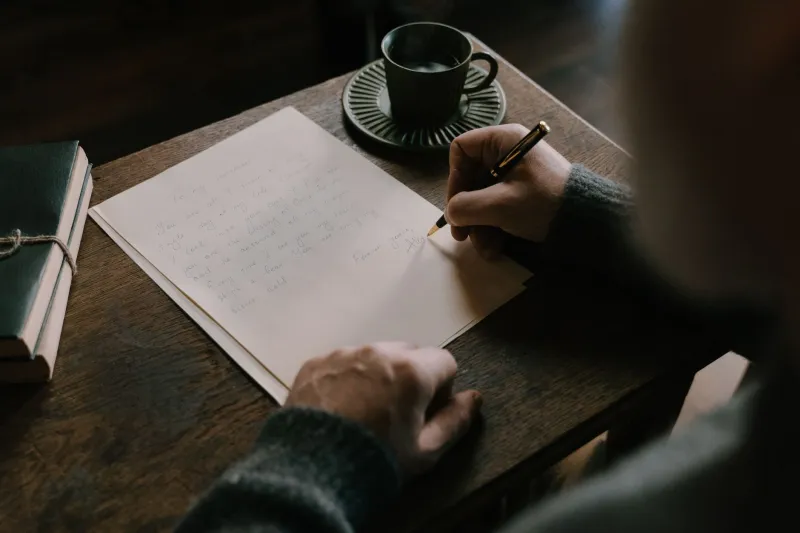
There is a particular kind of courage that most of us never quite summon. It does not announce itself with fanfare. It waits, patient and accusing, in the space between what we mean to say and what we actually say. We know it is there. We have even named it — "we need to talk," "I've been meaning to bring this up," "after the holidays, let's really sit down" — as though scheduling honesty were the same as practicing it.
It is not.
Across America, millions of people are carrying the weight of conversations they have promised themselves they will eventually have. With aging parents who hold political views that feel like a personal rebuke. With partners whose silence on certain subjects has calcified into an unspoken rule. With adult children who have drifted toward ideologies that feel foreign, even threatening. With friends whose social media presence has quietly revealed a version of themselves that conflicts with the person we thought we knew. We file these tensions away. We tell ourselves the moment is not right. And then we wait for a moment that, by design, never arrives.
The Myth of the Right Moment
Deferred honesty is not the same as patience. Patience implies an active, purposeful waiting — a belief that the conditions will genuinely improve. Deferral, by contrast, is the quiet agreement we strike with our own discomfort. We are not waiting for the right moment so much as we are constructing reasons why this moment, and every moment after it, is the wrong one.
The logic is seductive precisely because it sounds responsible. Who wants to raise a contentious topic at a family gathering? Who wants to derail a pleasant dinner with a confrontation about voting records or immigration policy or the cousin who shared something genuinely alarming on Facebook? The instinct to protect the social atmosphere is real. But when that instinct becomes a chronic strategy, it stops being consideration and starts being avoidance dressed in polite clothing.
Psychologists have long recognized that avoidance, while offering short-term relief, compounds the underlying anxiety it is meant to soothe. Every time we choose not to have the difficult conversation, we reinforce the belief that we cannot have it — that it is too dangerous, too destabilizing, too likely to shatter something irreplaceable. The drawer fills. The silence becomes structural.
What We Are Really Protecting
When we defer, we tell ourselves we are protecting the relationship. But it is worth asking, with some honesty, whether we are protecting the relationship or protecting our image within it. There is a meaningful difference.
To speak truthfully about a political divergence — to tell a sibling that their embrace of authoritarian rhetoric genuinely frightens you, or to admit to a parent that your values have evolved in ways that feel like a departure from theirs — is to risk being seen differently. It is to introduce complexity into a relationship that has been operating on a simplified version of who you are. And that, for many of us, is the real terror. Not that the relationship will end, but that it will change. That the other person will have to reckon with the full, unedited version of you.
This is where the editorial mission of this publication becomes not merely conceptual but urgently personal. The mask we wear in our closest relationships — the one that smooths over disagreement, that performs harmony rather than experiencing it — is perhaps the most consequential one of all. Public authenticity means little if we cannot achieve it at the kitchen table.
The Political Dimension of Private Silence
In a country as politically fractured as the United States, the personal deferral of honest conversation has collective consequences. When we decline to speak truthfully with the people in our lives who hold views we find harmful, we effectively remove ourselves from the most intimate and potentially persuasive form of civic engagement that exists: direct, human conversation.
Research consistently suggests that personal relationships remain among the few channels through which people genuinely update their political beliefs. Not cable news. Not social media algorithms. Not op-eds. Conversations — real ones, uncomfortable ones, ones where both parties are present in their full complexity — are where minds occasionally change and where, at minimum, people feel genuinely heard rather than simply processed.
By deferring those conversations indefinitely, we do not preserve neutrality. We cede the field. The views we find troubling continue to develop, uncontested, in the private world of the people we love. And we console ourselves with the fiction that we will address it eventually, at some unspecified future date when the stakes feel lower and the moment feels safer.
The moment never feels safer. It only feels more distant.
Breaking the Cycle Without Breaking the Relationship
None of this is an argument for confrontation as a value in itself. Reckless, unprepared, or contemptuous honesty can do real damage, and the impulse toward care in our communication is not wrong. But there is a vast territory between aggressive confrontation and indefinite silence, and most of us have barely begun to explore it.
What would it look like to approach a deferred conversation not as a reckoning but as an inquiry? To say, not "I need to tell you that you are wrong," but "I have been wanting to understand something about how you see this, and I have been putting it off because I was afraid of what it might mean for us"? That kind of transparency — honest about the difficulty of the conversation itself — is disarming precisely because it is vulnerable. It does not perform certainty. It models the very openness it is asking the other person to meet.
This is the work that the phrase "behind the mask" demands of us at its most personal level. Not merely the public removal of political performance, but the private willingness to stop managing other people's perceptions of us at the expense of genuine connection.
The Drawer Is Not a Safe
There is one final thing worth naming. The conversations we defer do not disappear. They accumulate. And what accumulates in silence has a way of expressing itself in other forms — in resentment that surfaces as irritability, in distance that reads as indifference, in the slow erosion of intimacy that neither party can quite explain but both can feel.
The drawer is not a safe. It is not protecting the things stored inside it. It is simply keeping them out of sight long enough for us to forget, temporarily, that they are still there.
America's relationship with deferred honesty is not a personal failing unique to any individual. It is a cultural habit, shaped by a deep and understandable fear of conflict in a society that has grown increasingly practiced at performing consensus while experiencing profound division. But habits, however deeply grooved, are not destiny.
The conversation you have been meaning to have is still waiting. So, in all likelihood, is the person you have been meaning to have it with.